


Roblox averaged 138 million daily active users (DAUs) in the third quarter of 2026, about 9% fewer than the 151.5 million it reported a year earlier. The figures come from the shareholder letter and Form 10-Q Roblox filed with the US Securities and Exchange Commission on Thursday 29 October, ahead of its earnings call at 20:30 UTC (4:30 pm ET).
The quarter wasn't all down. DAUs rose 12% from the second quarter, revenue grew 16% year over year to $1.572 billion, and bookings of $1.7 billion beat the top of Roblox's own guidance. But bookings, the money players actually spent in the quarter, fell 12%, and the company expects a steeper drop over the holidays.
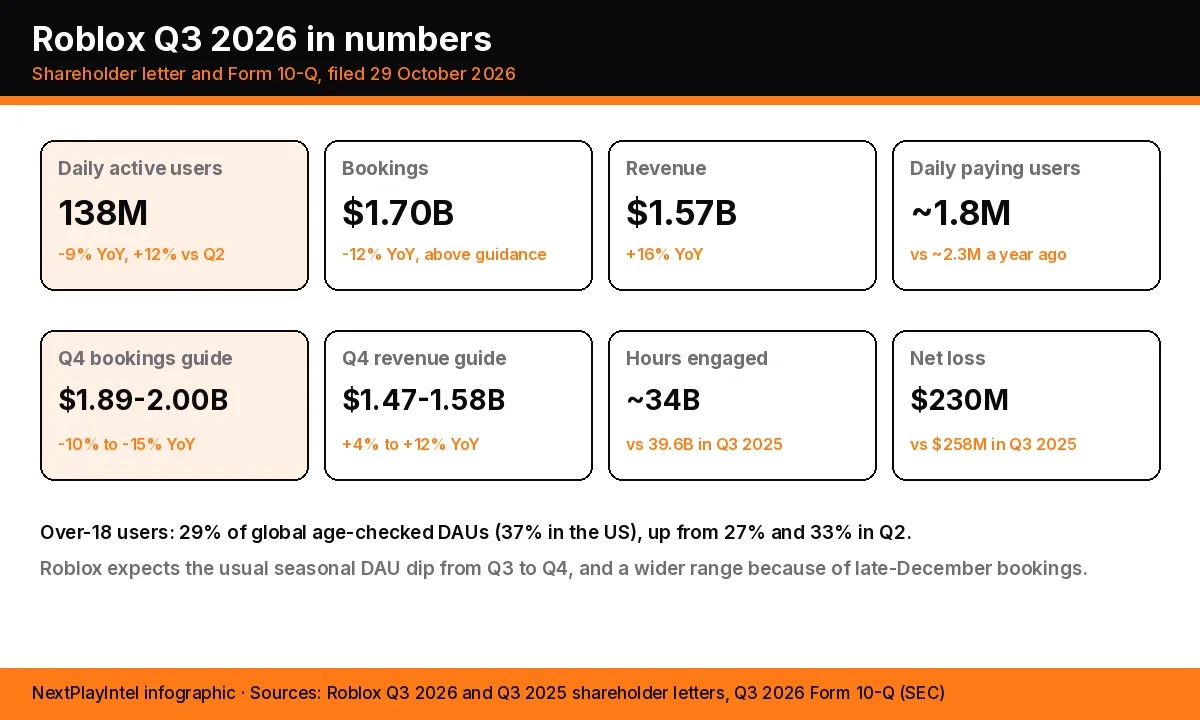
Q3 2026 against Q3 2025
Metric | Q3 2026 | Q3 2025 |
|---|---|---|
Average daily active users | 138 million | 151.5 million |
Hours engaged | Nearly 34 billion | 39.6 billion |
Bookings | $1.7 billion (down 12%) | $1.92 billion |
Revenue | $1.572 billion (up 16%) | $1.360 billion |
Average daily unique paying users | About 1.8 million | About 2.3 million |
Consolidated net loss | $230 million | $258 million |
Roblox put the bookings fall down to "a comparison to the extraordinary growth we experienced in 2025". A year ago its DAUs and bookings were both up 70%. On a two-year basis, it says, Q3 bookings are still up more than 50%.
Why revenue rose while spending fell
Revenue and bookings point in opposite directions because of accounting, not a hidden boost. Roblox spreads most revenue from durable virtual items over the estimated lifetime of a paying user, which it put at 27 months in both Q3 2026 and Q3 2025. So this quarter's revenue still reflects 2025's record spending, while bookings show what players spent now. With bookings falling, revenue growth is set to slow too, and the Q4 guidance already shows that.
The Q4 outlook
For October to December, Roblox expects revenue of $1.47 billion to $1.58 billion (up 4% to 12%) and bookings of $1.89 billion to $2.00 billion, down 10% to 15% year over year. It also expects a consolidated net loss of $363 million to $423 million. Its guidance assumes the usual seasonal dip in DAUs between Q3 and Q4. It has widened the range because a large share of bookings typically comes in the last week of December.
Where Roblox says growth comes next
Older players: users aged 18 and over made up 29% of global age-checked DAUs (37% in the US), up from 27% and 33% in Q2. Roblox says this is its fastest-growing group.
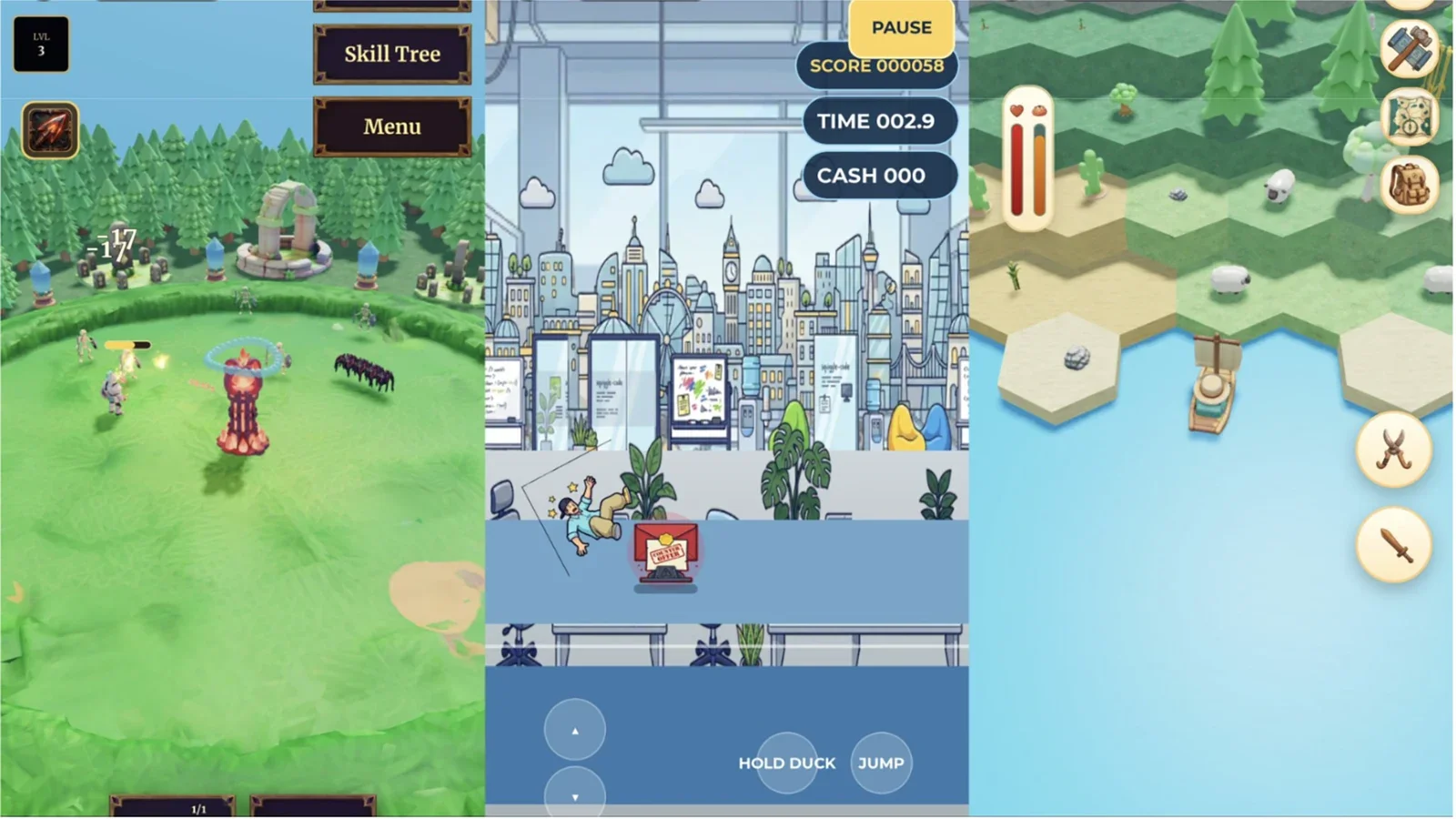
AI creation: more than 80% of the top 100 games used its AI tools in the past month. More than 500,000 people used Build, its prompt-to-game tool, during its alpha test in New Zealand, Singapore, Serbia and Thailand.
Roblox Everywhere: creators will be able to publish standalone Roblox games to other app stores. The first phase is due in the first half of 2027.
Safety costs are rising too. By the end of Q3, 64% of global DAUs had completed an age check, which Roblox now requires before players can use chat. The 10-Q also lists $49 million of legal settlement expenses in the quarter, tied to settlements and settlement talks with certain states and territories over youth consumer protection and digital safety.
Confirmed and not confirmed
Confirmed: every figure above, from Roblox's SEC filings. Not confirmed: when DAUs will grow year over year again, which games will launch first through Roblox Everywhere, and exact dates for its "Universal Player" plan to bring existing console, PC and mobile games onto the platform. Investing.com's review of the earnings slides called this the platform's first negative DAU growth; Roblox's letter doesn't describe it that way.
For other recent results, see our reports on Microsoft's Xbox revenue for the quarter and Take-Two's 9 November earnings date. Roblox also runs on consoles: our guides cover installing games on PS5 and installing games on Xbox Series X|S, and our PlayStation 5 and Xbox Series X pages list specs.
In India, the call ran at 2:00 am IST on 30 October, and Roblox says Indian DAUs grew 37% year over year.
Sources & verification
Sources last verified on . This article covers published information, not hands-on testing.
Editorial & update notes
First published 31 Oct 2026 with primary-source citations.