
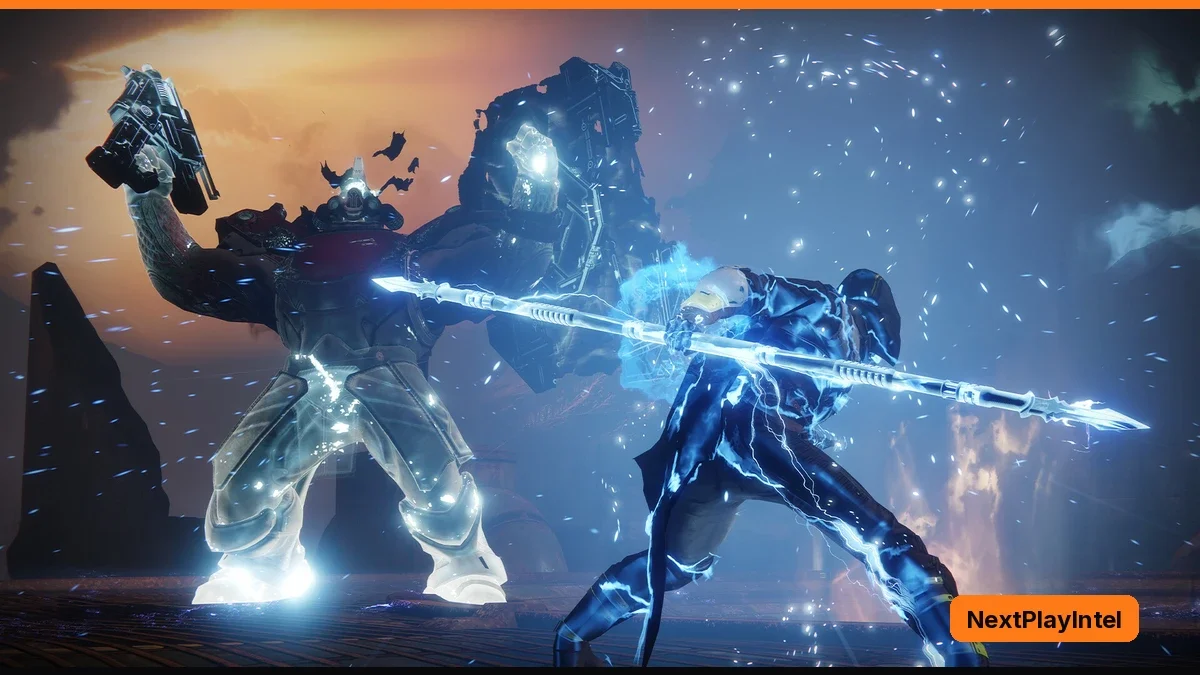
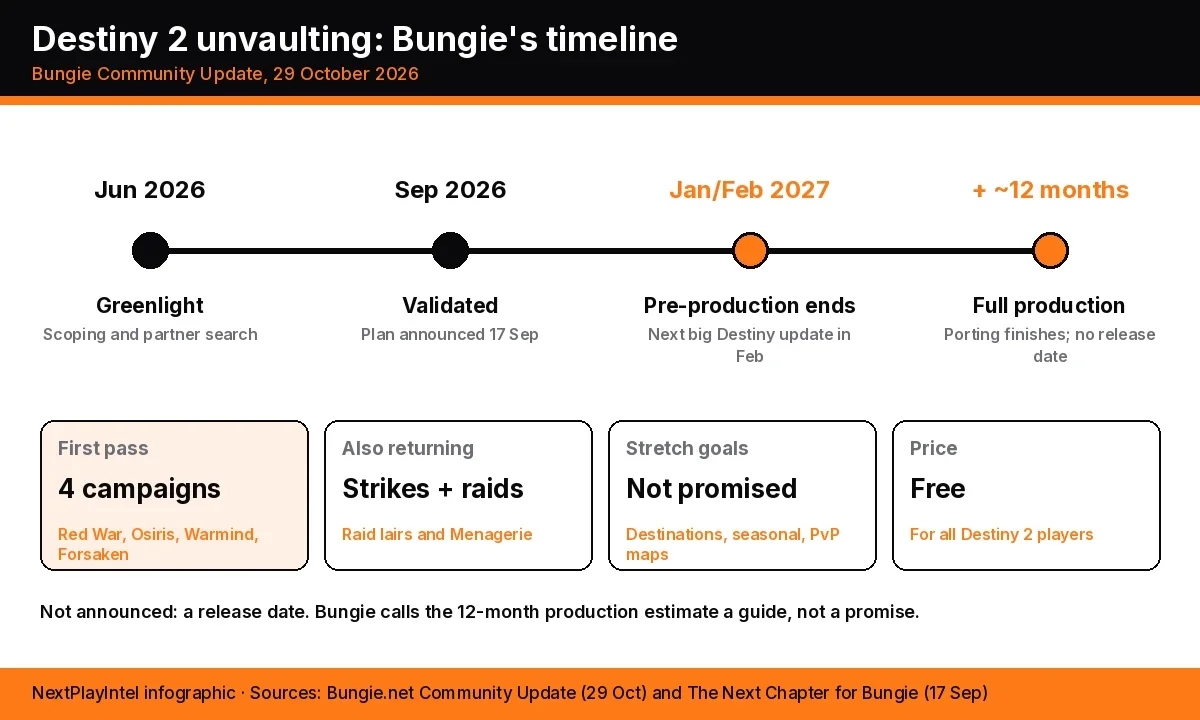
Bungie has named the first vaulted Destiny 2 content it will bring back: the Red War, Curse of Osiris, Warmind and Forsaken campaigns, plus their strikes, raids and raid lairs and the Menagerie activity. Head of Product Josh Deane set out the plan in the studio's first Bungie Community Update on Thursday 29 October, and said all of it will be available to every Destiny 2 player.
It isn't coming soon. Deane said the project is in a pre-production, "proof-of-work" stage that should last until roughly January or February 2027, and that full production after that will take "about 12mos. to fully complete the porting process." Bungie gave no release date. Read together, the two estimates point to early 2028 at the earliest, though that is our reading, not a date Bungie has given.
What comes back, and what may not
Bungie split the work into three tiers in its post. Only the first is a firm plan.
Tier | Content | Status |
|---|---|---|
First pass | Red War, Curse of Osiris, Warmind and Forsaken campaigns; their strikes, raids and raid lairs; Menagerie with reprised rewards | Planned, free for all players |
Stretch goals | Free-roam destinations (public events, Lost Sectors, Escalation Protocol), seasonal activities from Sundial (Season 9) to The Coil (Season 23), raid weapon updates, PvP maps | Being investigated, at launch or later |
No current path | Updated New Light experience, seasonal story missions, the Kell's Grave Gambit map, seasonal hubs such as the Eliksni Quarter | Not planned |
Deane said the last group was cut for "technical and/or strategic reasons", because bringing it back "could come at a cost for what we want to build for you in the future."
Why this matters
Bungie removed these campaigns in November 2020, when Beyond Light launched, and new players have not been able to play Destiny 2's original story since. Deane called that decision "a moment that fragmented our experience and broke faith with our community." In its 17 September post, The Next Chapter for Bungie, the studio confirmed Monument of Triumph had been announced as Destiny 2's final content update, then said "we are not done with Destiny" after the backlash. It also explained the delay: changes since Beyond Light mean lighting, encounters, combatants and other systems all need updating, so this is more than restoring old files.
What else Bungie teased
Destiny 2 "Celebration": new updates beyond Monument of Triumph, with a progress update expected in February.
Destiny "Legacy": a project to serve "the whole experience" of the series "where you play today", also due a February progress update. Bungie didn't say what form it takes.
A redacted third project: no details or date.
Bungie also told players not to expect a Destiny announcement at The Game Awards this year. Its next major Destiny update is targeted for February 2027.
Confirmed and not confirmed
Confirmed: the first-pass content list, free access for all players, the pre-production window and the roughly 12-month production estimate. Not confirmed: a release date, which stretch goals will make it, and what Destiny Legacy actually is.
Destiny 2 is free to play on PS5, PS4, Xbox Series X|S, Xbox One and PC. To get it ready, see our guides to installing games on PS5, installing games on Xbox Series X|S and moving Steam games to another drive, or our PlayStation 5 and Xbox Series X console pages.
In India, Destiny 2 is also free on Steam, and Bungie hasn't given an IST time for its February update.
Sources & verification
Sources last verified on . This article covers published information, not hands-on testing.
Editorial & update notes
First published 31 Oct 2026 with primary-source citations.