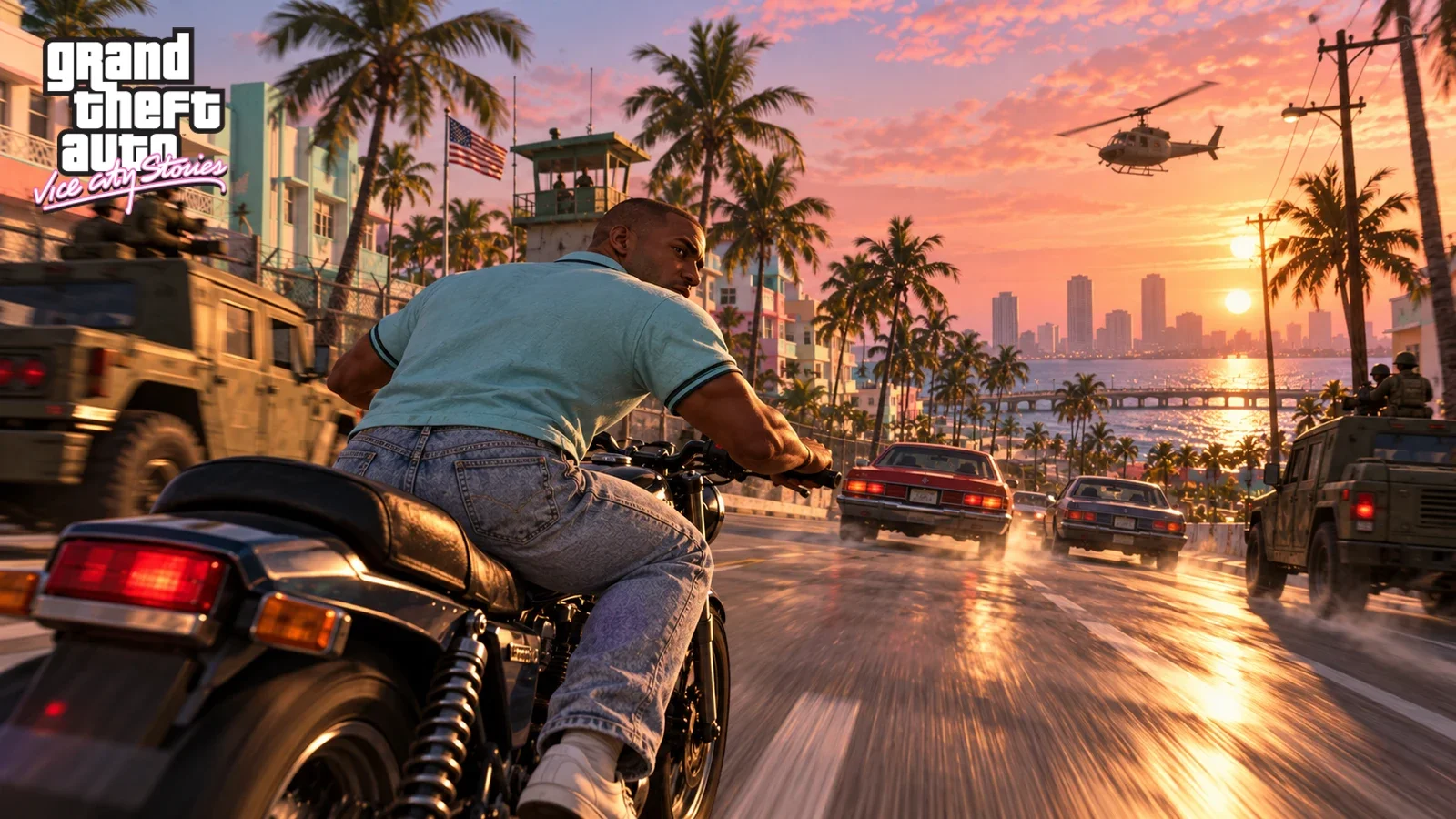
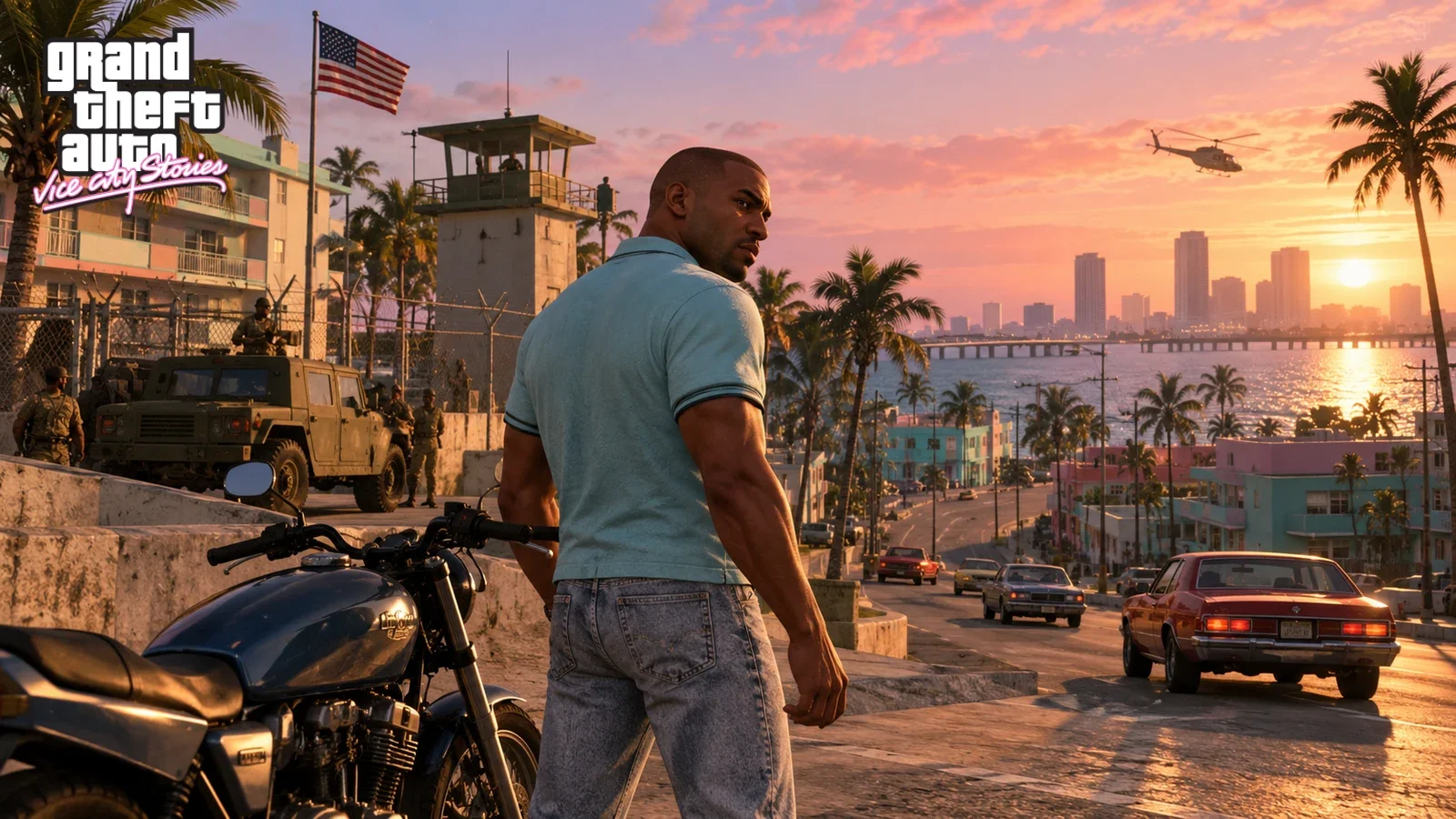
Grand Theft Auto: Vice City Stories revisits Vice City before Tommy Vercetti's rise. Victor Vance begins from a different position: he is a soldier trying to support his family, then becomes entangled in the city's criminal economy. The story's tension comes from the gap between that responsibility and the opportunities presented by the people around him.
The game released in 2006 on PSP, followed by PS2. Its story takes place in 1984, two years before Vice City. It is a separate campaign, not an expansion that requires the 2002 game.
Who developed GTA Vice City Stories?
Rockstar Leeds and Rockstar North collaborated on Vice City Stories, with Rockstar Games publishing it. The official game page identifies the studios and the premise.
The PSP credits identify Leslie Benzies as producer, Aaron Garbut as art director, and Obbe Vermeij, Adam Fowler and Alexander Roger in technical-direction roles. Leeds' work is central to understanding the portable production; it should not be reduced to a footnote under the better-known North studio.
These credits belong to a particular release. A developer credit is separate from a character performance: Dorian Missick portrays Victor, while Philip Michael Thomas returns as Lance. Writing, voice acting, animation and mission scripting each contribute to the resulting character.
Victor, Lance and the people around them
Victor's military circumstances deteriorate through his involvement with Sergeant Jerry Martinez. Phil Cassidy becomes one of his contacts, while Louise Cassidy-Williams provides an important personal relationship. Lance Vance introduces another source of ambition and risk.
The broader cast includes Marty Jay Williams, Umberto Robina, Ricardo Diaz and the Mendez brothers, Armando and Diego. The character reference documents how they connect to Victor's work. This introduction avoids the deaths and betrayals that resolve those relationships.
The brothers' differing priorities help distinguish this story from Tommy's. Victor's desire to provide for others does not make his actions harmless, and Lance's enthusiasm creates problems as well as opportunities. The campaign repeatedly puts family loyalty beside criminal expansion.
Vice City two years earlier
The 1984 setting uses familiar districts while changing particular locations and their state of development. Returning players can recognize the city without assuming that every business, building or route matches the 1986 version.
The period is expressed through more than a date label. Vehicles, clothing, music and the people occupying the city establish its identity. Environment assets shape the map, vehicle assets shape travel, and character and audio assets shape the story’s presentation.
This is not GTA VI's Leonida. The later game returns to the Vice City name in a different setting and production era. Claims that a building or character must carry over require specific evidence rather than recognition of a familiar name.
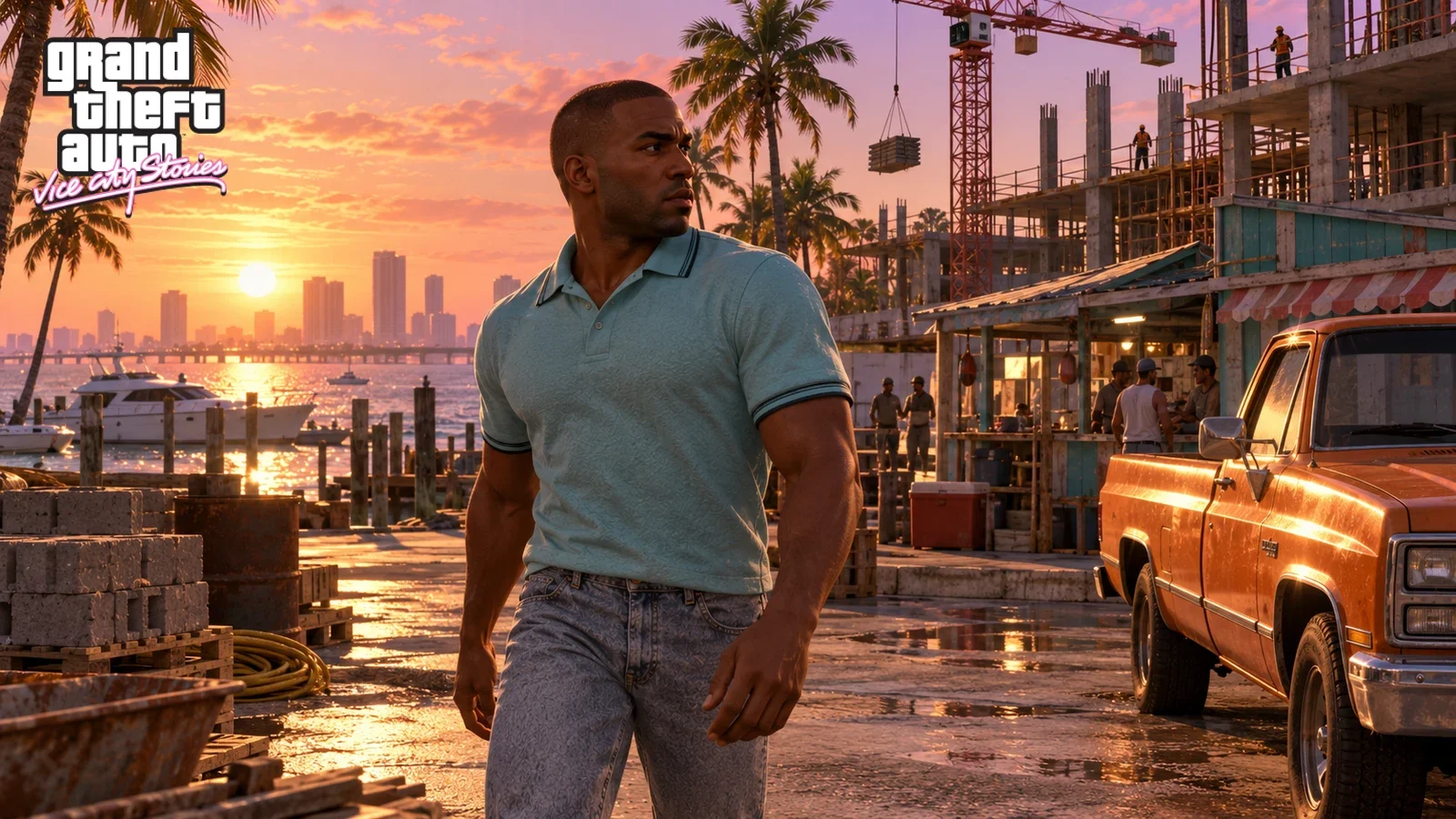
Empire building and the business layer
Vice City Stories develops a business empire system that makes property and territory a continuing concern. The player can take over and operate criminal businesses, creating a layer of activity beyond accepting the next story mission.
This differs from simply buying a safehouse. A place to save or store a vehicle serves a different purpose from a business that participates in the empire system. Understanding what a property does prevents the mistake of treating every purchase as an equivalent upgrade.
For a first playthrough, build an understanding of the system before expanding indiscriminately. More holdings can mean more things to manage. A useful route through the city connects the activities you actually need, rather than maximizing the number of icons owned as quickly as possible.
Movement, missions and preparation
The game combines driving, shooting, aircraft and other activities within the third-person city. Victor can swim, a significant difference from Tommy in the original Vice City. That does not mean water is always a safe or convenient route; the objective and available transport still matter.
Mission difficulty often comes from several tasks arriving together: control a vehicle, watch the route, respond to attackers and preserve an objective. Break those demands apart when diagnosing a failure. If navigation is the problem, learning the route may do more than changing weapons.
The handheld controls also make camera and movement practice worthwhile. A PS2 version changes the controller context, so advice based on a PSP button layout should identify the intended hardware rather than assuming every player sees the same controls.
PSP and PS2 editions
PSP is the original release platform; PS2 received a later adaptation. Historical PS3 availability through a classic release is a distribution and compatibility matter, not evidence of a ground-up PS3 remake. Do not confuse the game with the unrelated Vice City Definitive Edition.
There is no official native PC or mobile edition covered by this guide. Videos of emulation or fan conversions should be described as such. A phone running the PSP game still needs instructions for that version and its emulated controls.
The PSP's multiplayer features should not be assumed to carry over to the PS2 release. Likewise, a code that unlocks multiplayer content is not a general story-progression cheat. The VCS cheat guide keeps story inputs and platform notes separate.
Where it fits in a full playthrough
Play Vice City first if you want to experience the release order and recognize the prequel's references afterward. Play Vice City Stories first if you deliberately prefer fictional chronology, while accepting that the later-developed mechanics will not all carry into the older game.
For Tommy's campaign, see Vice City. For the earlier PSP experiment, see Liberty City Stories. Neither is required software for this standalone game.
Sources & verification
Sources last verified on . This article covers published information, not hands-on testing.
Editorial & update notes
AI-assisted research and writing based on the linked references. This is not a hands-on review. Images are labelled AI-generated illustrations, not gameplay screenshots.