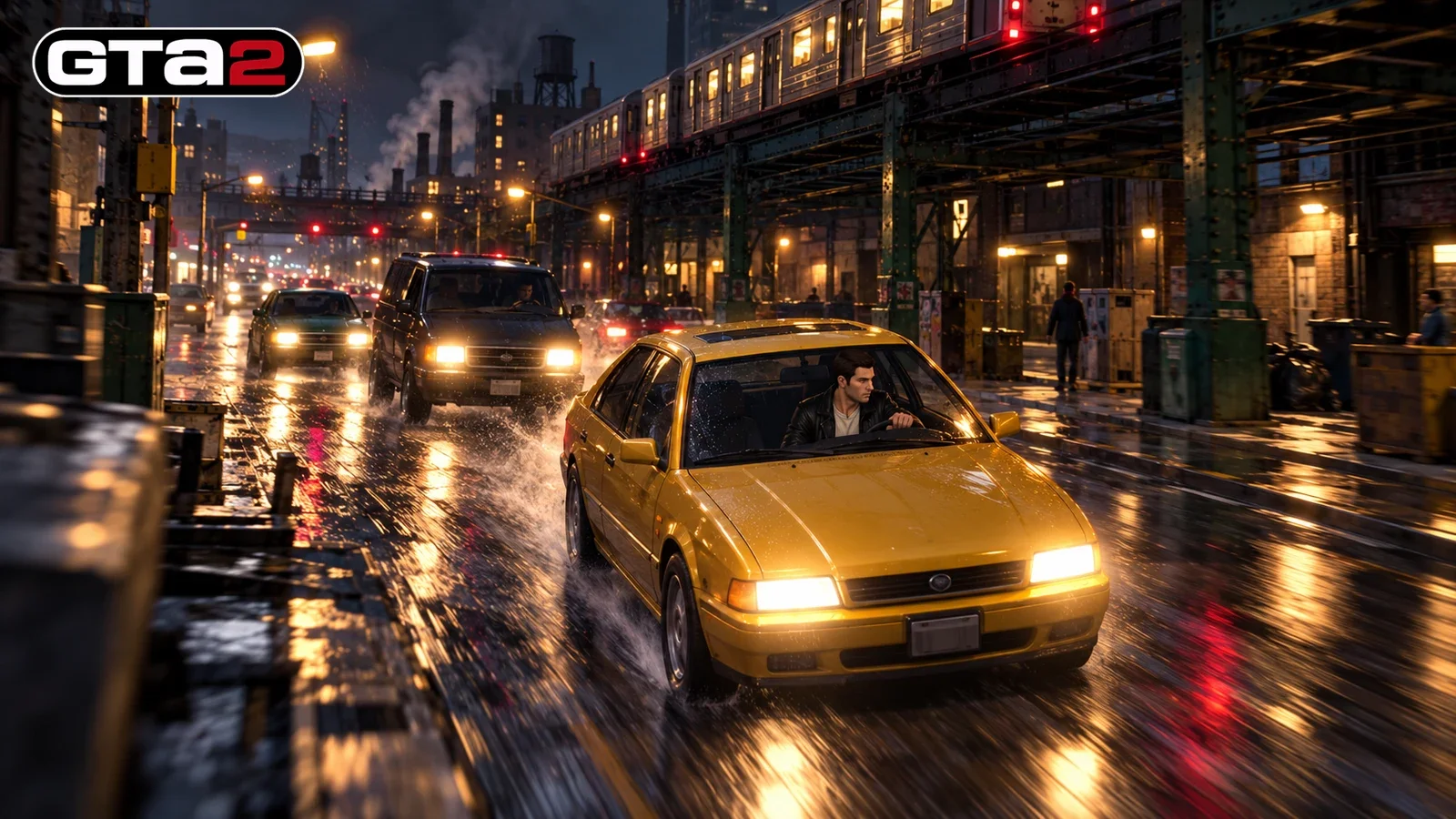
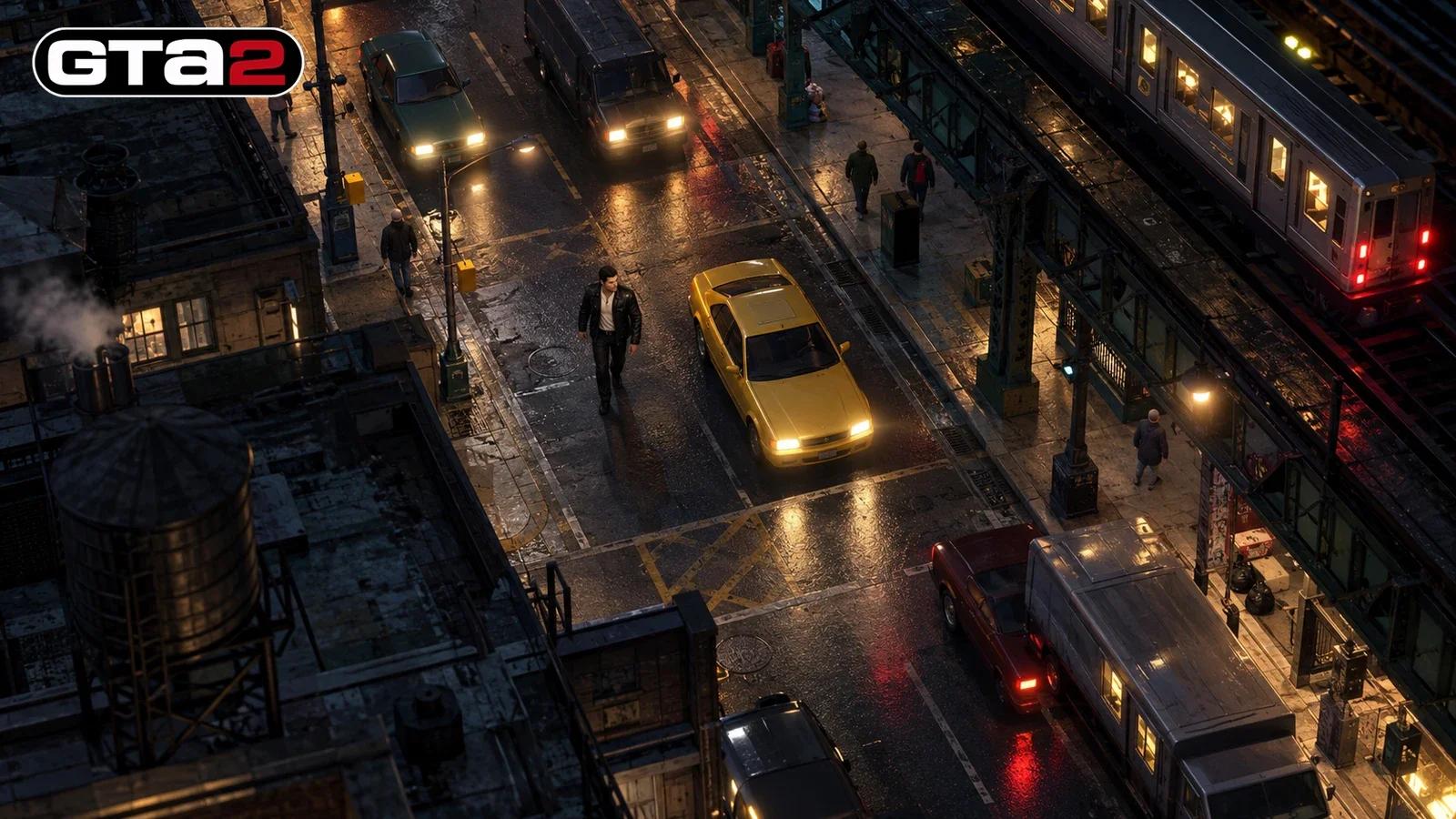
GTA 2 develops the overhead formula around competing gangs. The city is not simply a backdrop for missions: organizations react to your actions, and gaining one group's approval can damage your standing with another. That makes the choice of employer part of the game's structure.
Released in 1999, it is a full sequel to the original GTA, separate from the London expansions. It also predates GTA III's third-person transformation. A complete history should treat it as a distinct experiment in systemic city design, rather than only as the game that came before the famous 3D one.
GTA 2 developers and production credits
DMA Design developed GTA 2, with Rockstar Games as publisher. DMA later became Rockstar North. The series' modern studio identity should not erase the name under which this game originally shipped. Take-Two's 1999 filing records the October release.
The subsequent Game Boy Color version involved Tarantula Studios. That platform credit is a reminder that a port can require substantial adaptation, particularly when moving an urban simulation onto a handheld with a much smaller display and different memory limits. Do not infer a handheld's feature set from a PC screenshot.
The PC credits name Keith R. Hamilton as lead programmer and Ian McQue as lead artist, with Colin Macdonald and Tina Scholefield-Nicholson credited as producers. These individual responsibilities give a more precise account than attributing the whole game to DMA founder David Jones.
Claude Speed and Anywhere City
The protagonist is Claude Speed. The setting is commonly known as Anywhere City, divided into Downtown, Residential and Industrial districts. The game's retro-futuristic mixture makes its exact fictional year a poor place to manufacture certainty: sources have presented conflicting date interpretations. This guide does not rely on a precise year to explain the story.
Claude Speed should not automatically be equated with GTA III's Claude. A shared first name is not sufficient evidence of identical biography or continuity. GTA 2 also had a live-action promotional film featuring Scott Maslen; the filmed portrayal is not the same thing as a voiced in-game performance. The game reference distinguishes the game and promotional film.
The protagonist functions primarily as the player's entry into the city's competing organizations. His character is defined less by long conversations than by the jobs he takes and the groups he antagonizes. That difference changes how the story is experienced: the map and reputation system carry much of the narrative pressure.
Gangs and the people behind the jobs
The Zaibatsu Corporation appears across the districts. Other organizations include the Yakuza and Loonies, Rednecks and Scientists, and the Russian Mafia and Hare Krishna. Each district creates a different set of local tensions.
Named contacts include Johnny Zoo of the Yakuza, Elmo of the Loonies and Trey Welsh of the Zaibatsu in the opening district. Later figures include Billy Bob Bean, Dr. LaBrat, Red Valdez, Jerkov, Sunbeam and Uno Carb. The character reference connects those names to their organizations. They are fictional mission contacts, not members of the development team.
Understanding the affiliations is more useful than memorizing every name at once. If a mission asks you to attack one organization on another's behalf, the outcome can change which jobs remain convenient to pursue. The city's social structure and its combat encounters are therefore linked.
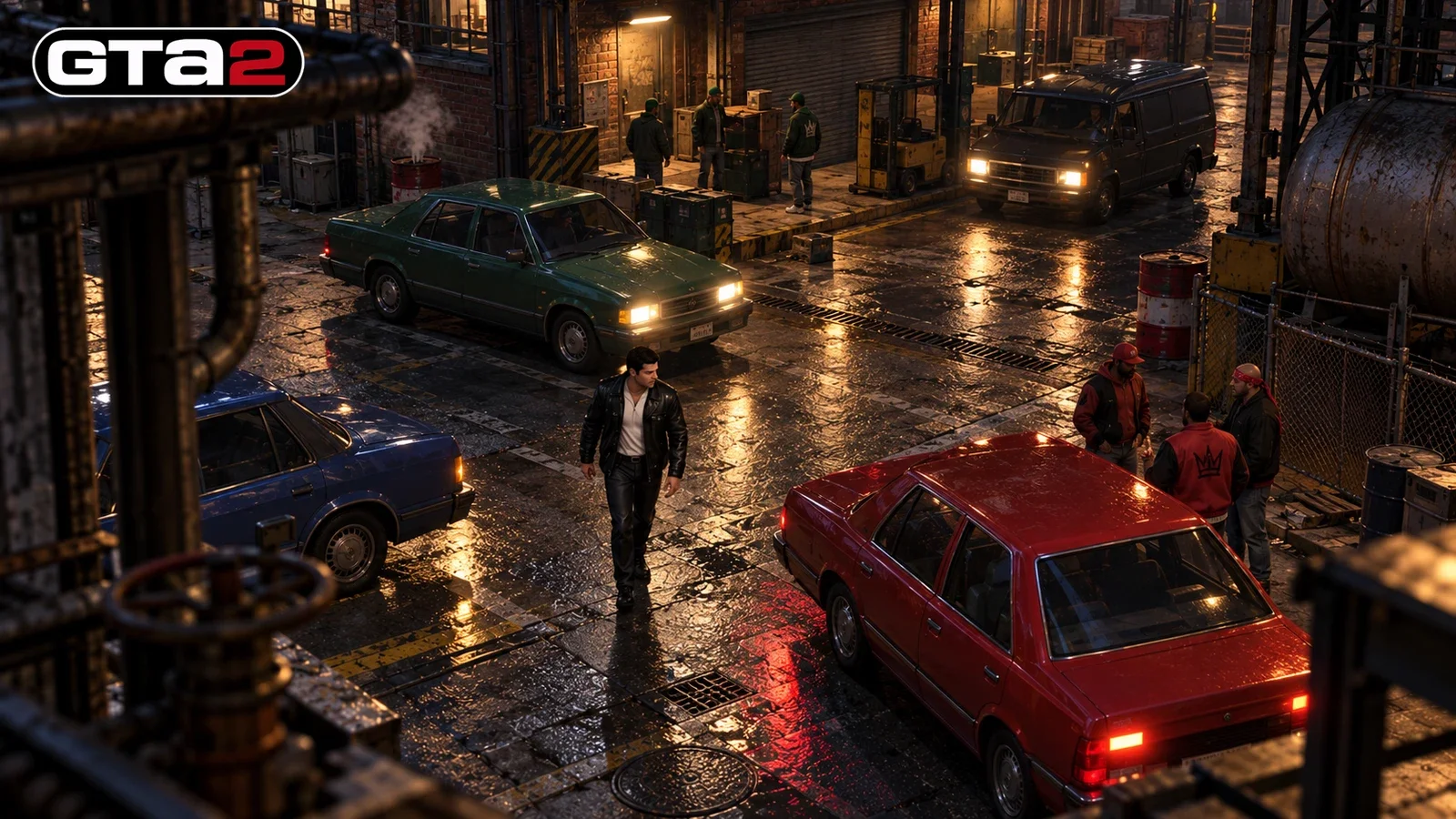
Respect, mission choice and progression
Respect is the major organizing idea. Your actions affect gang approval, and that approval influences access to work. Unlike a straightforward chain of missions, the system encourages thinking about the consequences of taking sides.
For a first run, avoid treating every nearby gang member as an interchangeable target. Before starting a fight, consider whose territory you are in and which organization you want to work for next. A short-term action can make a later route or mission approach more troublesome.
The game still revolves around score, vehicles and police escalation. Efficient progress comes from combining those systems: choose work you can reach, preserve transport that suits the route, and avoid unnecessary detours into hostile areas. A nominally fast vehicle is not always the easiest tool for a narrow or crowded section of the city.
Saving also belongs to the older design philosophy, rather than the constant checkpoints of recent GTA releases. Learn the game's saving arrangements before undertaking a long session, and do not assume finishing a single task guarantees that every subsequent action is preserved.
Four platform families, different implementations
The principal releases are PC, PlayStation, Dreamcast and Game Boy Color. The handheld edition is substantially adapted; it is not a fourth identical build. Visual presentation and content can differ between the home versions too.
Cheat entry illustrates the problem with universal lists. PC uses a name-entry activation step involving GOURANGA, while console lists use different names and the Game Boy Color release has its own codes. A Dreamcast invulnerability code is not evidence for a PlayStation equivalent with the same spelling.
When reading a modern guide, distinguish native releases from backward compatibility or emulation. A device capable of running a historical version does not automatically receive a separate official edition, updated controls or a new cheat system.
Why GTA 2 remains a distinct entry
Its most useful comparison is with later games that make gangs part of the map. GTA 2 makes faction relationships a direct part of mission access, whereas later titles often use different territory or story systems. Calling all of them simply 'gang mechanics' misses the decisions each one asks the player to make.
Continue with GTA 2 codes by platform or GTA III and the shift to a third-person city. For the surrounding release history, see our GTA series overview.
Sources & verification
Sources last verified on . This article covers published information, not hands-on testing.
Editorial & update notes
AI-assisted research and writing based on the linked references. This is not a hands-on review. Images are labelled AI-generated illustrations, not gameplay screenshots.