Grand Theft Auto began as an overhead driving and crime game, long before the cinematic presentation associated with GTA V. Its original 1997 release established a basic relationship that still defines the series: a city gives you a job, traffic complicates the journey, and the police can turn an ordinary escape into an improvised chase. Understanding that relationship is more useful than expecting an early version of Michael, Franklin and Trevor's story.
This guide covers the original game and its later handheld adaptation. London 1969 and London 1961 are separate mission packs, covered in their own articles. Story details below introduce employers and locations without reproducing a mission-by-mission walkthrough.
Who developed the first GTA?
The original developer was DMA Design, the Scottish studio later known as Rockstar North. Rockstar Games is the modern home of the series, but describing the 1997 release as a game originally developed by a studio already named Rockstar North obscures the history. Take-Two's 1999 annual filing places the first international release in November 1997 and the North American release in June 1998.
David Jones founded DMA Design. The early team also included writer Brian Baglow, whose retrospective account of the original game's development describes how pager messages could explain events that the game did not need to render. That is a useful example of writing solving a production problem: the text makes a criminal network seem larger than the visible scene.
The Game Boy Color adaptation came later and involved Tarantula Studios. It should be credited as a distinct port, rather than assuming every platform used the same production team. A publisher, a development studio and an individual designer describe different responsibilities; none alone represents everyone who made the game.
Three cities before three separate blockbuster games
The original campaign visits Liberty City, San Andreas and Vice City. These names later returned in much larger games, but their 1997 layouts are not the maps from GTA III, San Andreas or Vice City. In particular, the original San Andreas is a city setting; the 2004 game uses the name for a state containing multiple cities.
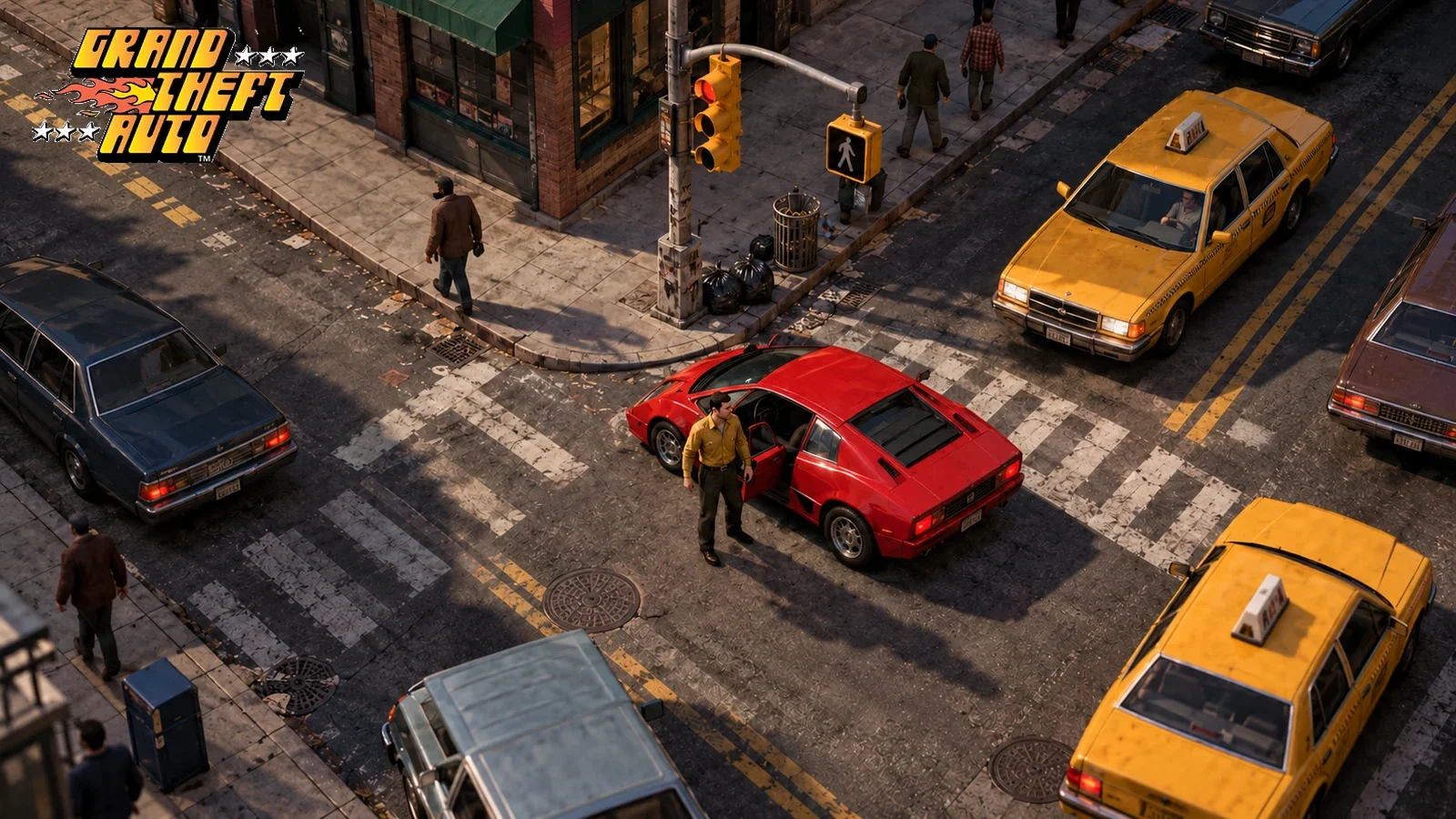
The campaign's geography matters because driving is the connecting activity. A job can ask you to reach a vehicle, transport someone, collect an item or escape a dangerous area. The destination is only part of the challenge. Finding a route, negotiating traffic and preserving a useful car all shape how the mission unfolds. An overhead viewpoint exposes the street network while reducing how far you can see down the road.
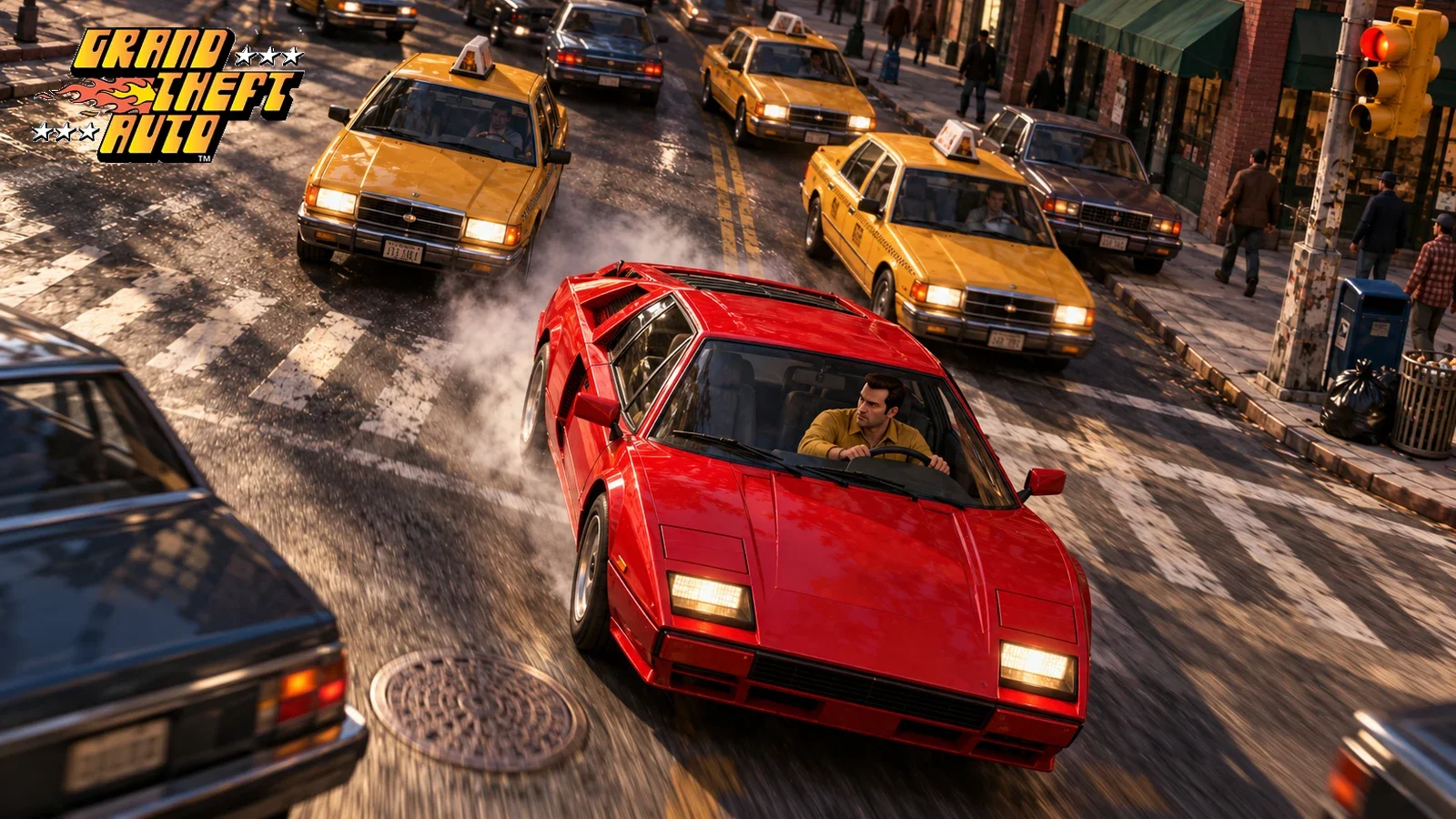
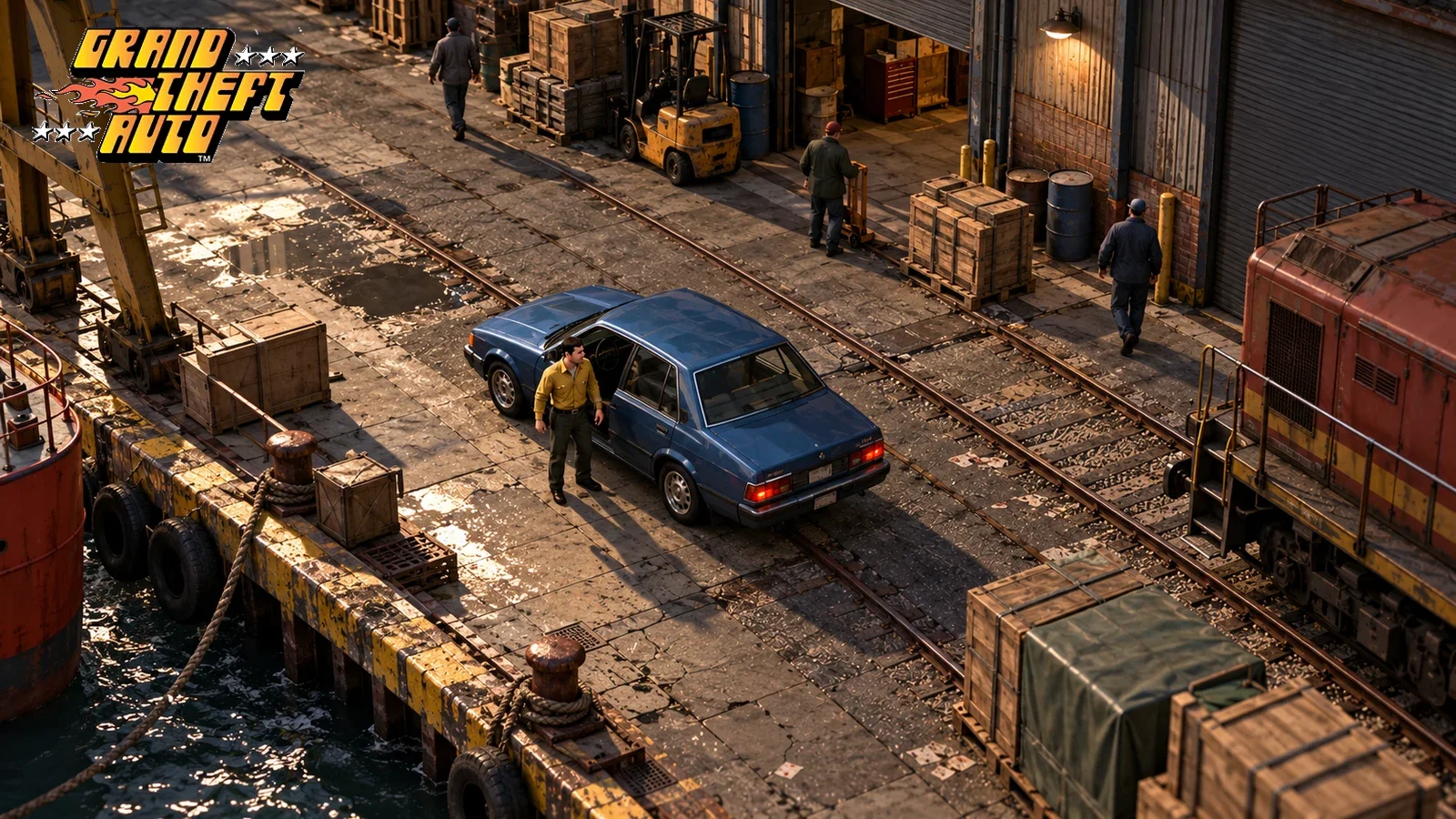
For a reader comparing screenshots, look at the relationship between the car, road and camera rather than simply counting visible detail. The small character sprite and large street grid make the vehicle the central tool. A later third-person game places more visual emphasis on the protagonist, but the underlying journey from contact to objective is already present here.
Playable characters and criminal contacts
The PC character selection includes Bubba, Divine, Katie, Kivlov, Mikki, Travis, Troy and Ulrika. These are selectable identities rather than eight separate cinematic campaigns. Platform character selections differ, so a PC roster should not automatically be presented as the complete PlayStation roster.
Important contacts include Bubby in Liberty City, Uncle Fu and El Burro in San Andreas, and Samuel Deever and Brother Marcus in Vice City. The character reference documents their roles. The game uses brief instructions and exaggerated personalities to establish who is hiring you. It does not build its protagonist through the extensive conversations, family scenes and performance capture seen in later entries.
Names recurring elsewhere in GTA do not automatically establish that two characters are the same person. Treat the early overhead games and later reinterpretations as distinct settings unless a source explicitly establishes a connection. This is particularly useful when reading fan theories about familiar city or gang names.
Missions, score and police pressure
GTA's progression is built around earning enough points to move through its stages. Completing jobs is an important route to that target, while the open city also allows other actions. This makes the original structure different from a modern checklist in which each named mission must be cleared in a fixed narrative sequence. The game reference describes the campaign, ports and score-based progression.
That structure changes what a beginner should prioritize. Learn reliable routes between important services and objectives before trying to maximize speed. A fast car is useful only while you can keep it on the road. When a run goes wrong, distinguish a navigation mistake from a vehicle-handling mistake; both may produce the same failed objective but need different solutions.
Police escalation creates a second layer of pressure. Reaching the objective with pursuit still active can be much harder than arriving quietly. The game's appeal is not that every mission has a unique mechanic. It is that a relatively small set of systems can interact differently during each journey.
PC, PlayStation and Game Boy Color editions
PC and PlayStation are the original home versions. The 1999 Game Boy Color release adapts the concept for substantially different hardware. It has its own presentation and cheat list; a handheld cartridge is not simply the PC program at a lower resolution. Historical platform listings establish that a release existed, not that it is currently sold digitally or supported on every modern operating system.
When identifying a copy, start with the platform and the title on its packaging. A compilation may contain the original game without being a remake. Emulating a console version also does not turn it into an official native PC or mobile edition. That distinction matters when following control instructions or looking up codes.
Where to go next
For the British mission packs, continue with London 1969 and London 1961. For the next full game, read GTA 2. Our original GTA cheat guide separates PC, PlayStation and Game Boy Color inputs rather than mixing them into a universal list.
Mike Dailly and the original GTA technical credits
Michael “Mike” Dailly is credited for the graphics engine on the original GTA. His credit record adds a specific technical contribution alongside the studio and writing history above. It should not be read as a claim that one person built every part of the game.
Sources & verification
Sources last verified on . This article covers published information, not hands-on testing.
Editorial & update notes
AI-assisted research and writing based on the linked references. This is not a hands-on review. Images are labelled AI-generated illustrations, not gameplay screenshots.