GTA London 1969 changes the identity of the original Grand Theft Auto through its setting. Instead of another fictional American city, it uses a stylized London, period vehicles and British criminal characters. It is a mission pack for the original game, not GTA 2 and not an early edition of GTA III.
The distinction is practical. Someone expecting the systems of San Andreas or a modern open-world London will misunderstand what this release offers. Its foundation remains the overhead, score-driven GTA design. The interest lies in how a new location and cultural references reshape that foundation.
GTA London 1969 release and development credits
London 1969 arrived in 1999 for PC and PlayStation. Take-Two's contemporary annual filing records the mission pack's April release. Regional launch dates differ, so this guide uses the release month rather than treating one territory's date as universal.
Rockstar Canada is associated with the expansion's development; that studio later became Rockstar Toronto. Individual credits identify Greg Bick as director, Kevin Hoare as lead PC programmer, Gary J. Foreman as technical director, Ray Larabie for artwork, and Blair Renaud for map design and sound direction. Dan Houser is credited for the screenplay. The PlayStation credits record also helps distinguish the console conversion from the original PC work.
Those roles reveal why an expansion is more than a collection of extra destinations. New vehicle graphics need to remain readable from above; roads need to support missions; dialogue must establish the period and location quickly. A shared engine does not eliminate the work of art, programming, sound and level design.
What kind of London is this?
This is a compressed videogame interpretation of London, not a navigational reconstruction of the real city. Period identity comes from the combined effect of streets, cars, language and music. Driving on the left also changes the immediate habits of a player arriving from the American settings.
The most useful way to read the map is as a network of routes between jobs and services. A recognizable place name supplies atmosphere, but its in-game position and travel time serve the mission design. Do not use real-world distances to infer how far a target should be from the player.
The title's year is the story setting, not the release year. This sounds obvious, yet it prevents a common catalogue mistake: London 1969 and London 1961 were both released in 1999. One is not an eight-year-older videogame technology than the other.
Protagonists and the criminal cast
The selectable London identities include Charles Jones, Johnny Hawtorn, Maurice Caine, Mick Casey, Rodney Morash, Sid Vacant, Winston Henry and Wolfie Vilans. As in the original GTA, character selection does not mean eight independently written modern story campaigns.
The principal criminal figures include Harold Cartwright, Jack Parkinson and the brothers Albert and Archie Crisp. Cartwright and Parkinson compete for power, while the Crisp brothers form another center of influence. These relationships explain why the player is continually working for people whose interests do not align. The London character reference records the cast and their mission connections.
This article deliberately stops short of listing every betrayal and death. For a first playthrough, knowing who employs you is enough to understand the immediate objective. A full plot synopsis would spoil the small amount of narrative discovery the mission pack provides.
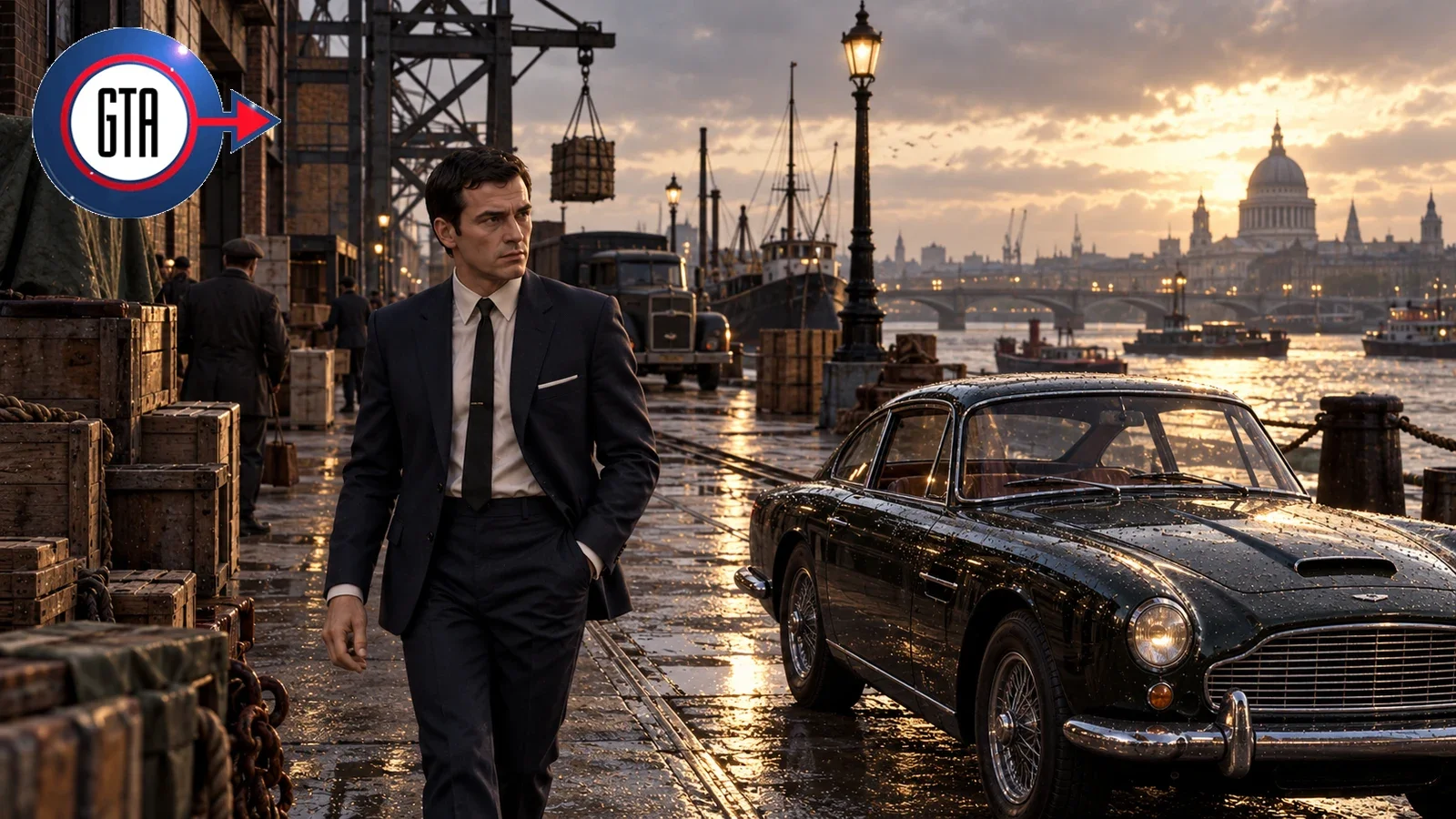
How the missions build on GTA
The core rhythm remains taking instructions, finding transport, completing a task and surviving the consequences. London changes the dressing and mission situations around that rhythm. A familiar vehicle-handling system can feel different when the road layout and visual vocabulary change.
For a newcomer, the most effective preparation is to become comfortable with the original game's steering and overhead view. If you keep missing turns, slowing down before an intersection is usually more valuable than choosing a more powerful car. A route that is easy to repeat is preferable to one that is theoretically shorter but difficult to navigate under pursuit.
Read the objective carefully before leaving a contact. In this style of GTA, a short instruction may contain the only clear explanation of the next step. The limited presentation places more responsibility on the player to remember the task than a modern mission interface with extensive navigation assistance.
PC and PlayStation: identify the release before using a guide
The mission pack originally depended on the first GTA; packaging and compilation arrangements should be checked when buying a historical copy. The PC and PlayStation editions also have different cheat inputs. Name-entry codes from one platform are not automatically valid on the other.
London 1961 is a separate PC-only follow-up, rather than an extra PlayStation chapter hidden in every London 1969 copy. Neither London title is part of the 2021 Definitive Edition, which contains GTA III, Vice City and San Andreas. A product described simply as a GTA trilogy therefore needs closer inspection.
Why this expansion belongs in a complete GTA history
London demonstrates that GTA's identity was not originally dependent on one country, camera style or group of protagonists. The transferable element was the relationship between the player, vehicles, missions and city. Later games returned to American satire, making this early British branch unusually distinctive within the catalogue.
Read the London 1961 guide for the follow-up, or use London 1969 cheats for PC and PlayStation for platform-specific codes. Neither guide assumes that an unofficial mobile download is an authorized edition.
Sources & verification
Sources last verified on . This article covers published information, not hands-on testing.
Editorial & update notes
AI-assisted research and writing based on the linked references. This is not a hands-on review. Images are labelled AI-generated illustrations, not gameplay screenshots.