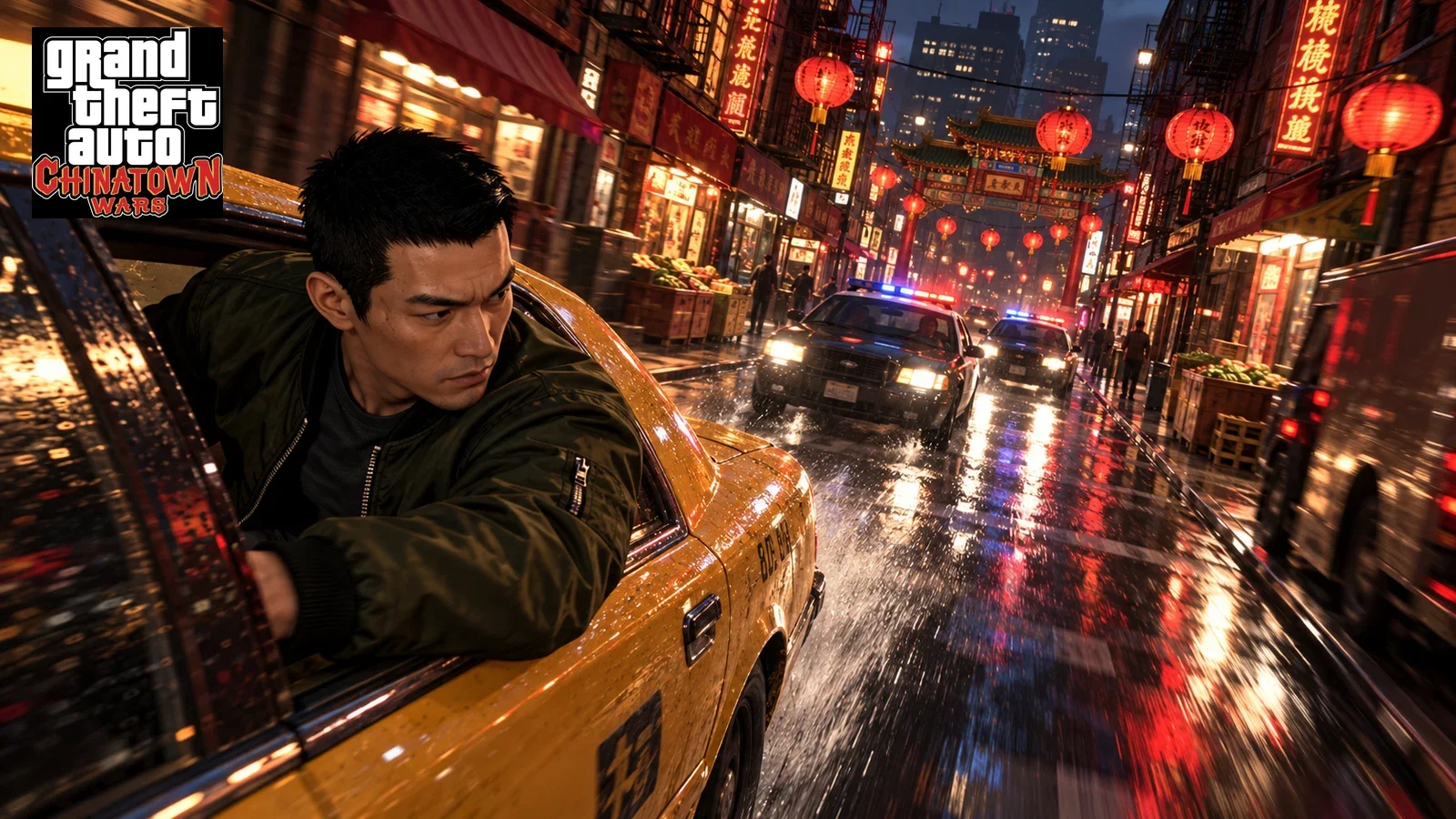
Grand Theft Auto: Chinatown Wars returns to an elevated view of the city while using design ideas built around portable play. It is not a remake of the original GTA. Huang Lee has his own story in the Liberty City associated with the HD era, and its touch interactions, illustrated dialogue and trading systems give it a distinct identity.
The Nintendo DS release arrived in 2009, followed by PSP and mobile adaptations. Those versions share the campaign's foundation but do not use identical interfaces, controls or cheat entry.
Rockstar Leeds and the credited creators
Rockstar Leeds developed Chinatown Wars with Rockstar North. Rockstar's official game page identifies that collaboration. The studio credit matters because the game is designed around a portable experience rather than being a straightforward reduction of GTA IV.
The DS credits identify Gordon Hall as studio president and Alastair Dukes as technical manager. The credits transcription also names Ian Bowden as art director and Dan Houser and David Bland as writers. These are selected historical roles, not a complete production roster.
The presentation distributes storytelling across text, portraits, animation and short interactions. That is a design choice with practical consequences: a player can follow a character exchange without a lengthy cinematic interruption, and the interface itself becomes part of the game's personality.
Huang Lee and the stolen sword
After his father's murder, Huang travels to Liberty City to deliver the Yu Jian sword to his uncle, Wu 'Kenny' Lee. An attack on arrival leaves him without the sword and forces him into the city's criminal conflicts. The opening turns an apparently straightforward family obligation into a search for answers and influence.
Key figures include Uncle Kenny, Triad leader Hsin Jaoming, Hsin's son Chan, Zhou Ming and detective Wade Heston. Ling Shan introduces Huang to aspects of the local world. The character reference records their relationships; the full reference contains spoilers beyond this introductory summary.
Huang's dialogue gives the campaign a sharp, skeptical tone. His role is not interchangeable with Niko Bellic's, even though both visit the same broader version of Liberty City. Their objectives and contacts create different routes through the setting.
Liberty City from a different camera
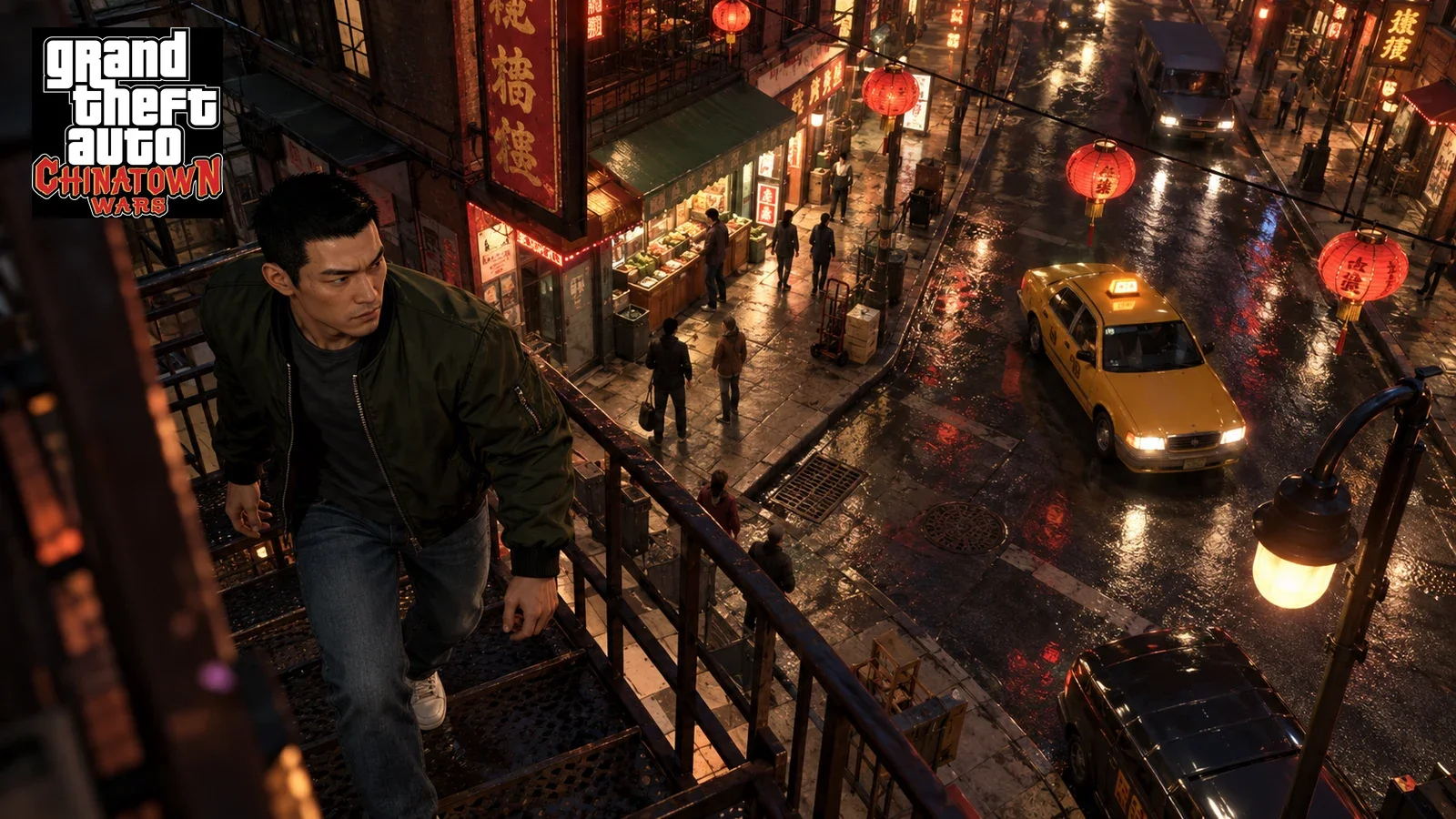
Chinatown Wars presents the city through an elevated, angled viewpoint and stylized visuals. That allows roads and nearby activity to be read quickly on a portable screen. It also means a screenshot should not be used as if it were a direct graphics comparison with GTA IV on a home console.
The camera changes what the player notices. Street direction, traffic gaps and nearby threats are prominent, while distant skyline detail plays a different role. The art has to support that practical reading of the city, not merely resemble a larger game's assets at a smaller size.
Familiar borough names do not guarantee identical mission routes or access to every area of GTA IV. Use a Chinatown Wars map for Chinatown Wars tasks. This is especially important when a guide refers to collectibles or location-based activities.
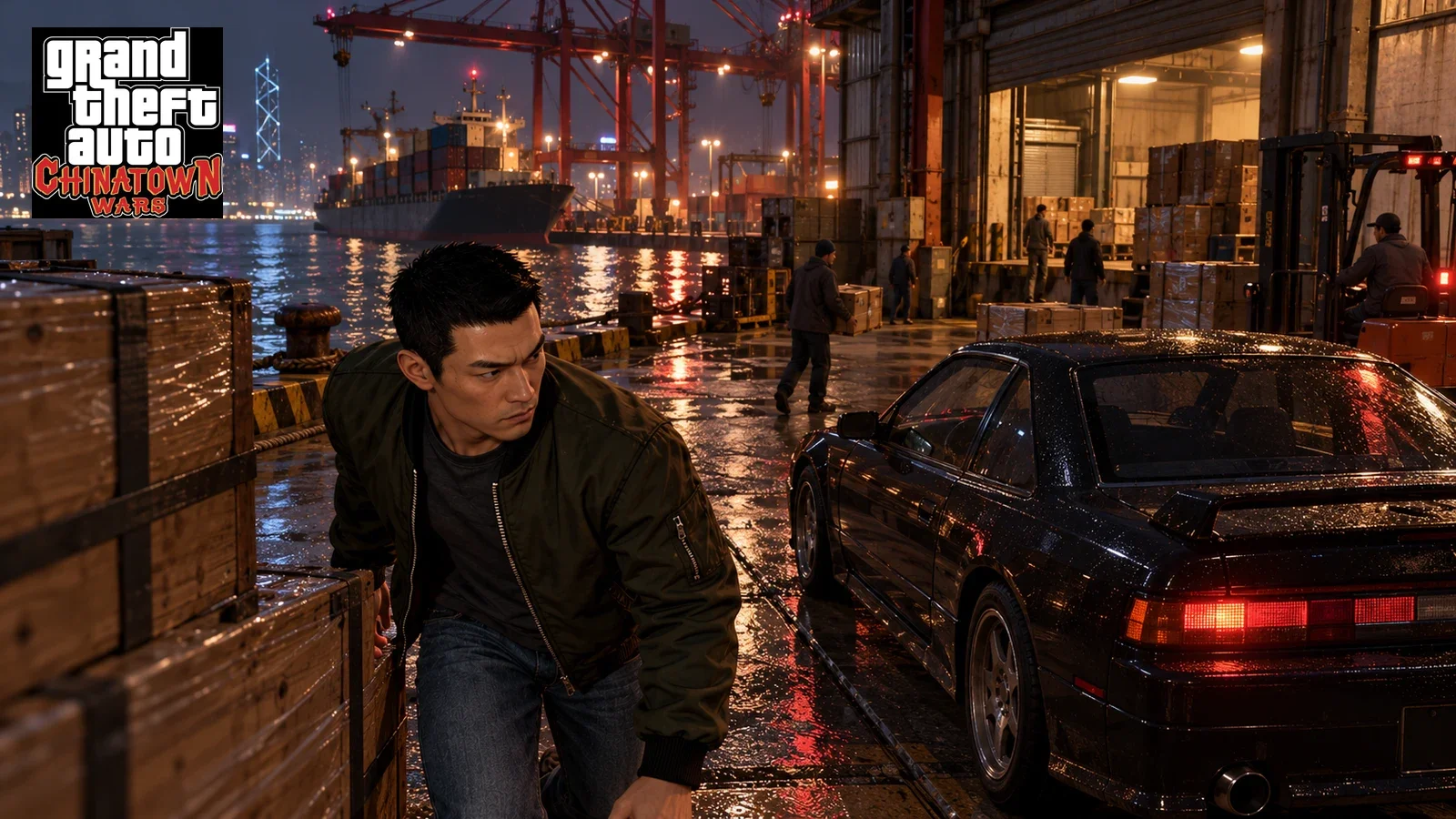
Touchscreen interactions and portable systems
The DS version uses its touchscreen for interactions that would otherwise be simple button prompts. Tasks such as manipulating an object or interacting with a vehicle become brief physical actions on the interface. The result is a different rhythm from simply watching the protagonist perform every action automatically.
The trading system creates a recurring economic activity across the city. For gameplay purposes, the relevant decisions are inventory, prices, travel and risk. It is a fictional game mechanic, not a real-world business guide. It can provide a reason to move between neighborhoods beyond the next story contact.
Police encounters also emphasize the moving street environment. Learning how pursuit behaves is more useful than assuming every GTA uses the same escape rules. The game's camera and traffic make route choice central to those encounters.
DS, PSP and mobile differences
The DS original has a dual-screen and touch-oriented interface. PSP adapts the experience to a different display and physical controls. Mobile releases use touchscreens again, but that does not make them mechanically identical to the DS version.
Cheat entry provides a clear example. DS and PSP use different button sequences, while the iPhone/iPod touch version uses letters on a safehouse whiteboard. Rockstar published a series of official Chinatown Wars code tips for that mobile implementation. A PSP sequence is therefore not a set of instructions for tapping imaginary shoulder buttons on a phone.
Historical connected features need similar care. A mission or service described in a launch-era guide may depend on an online system that has since changed. This article does not promise that every original download or account-linked feature remains available. Check the current support information for the edition you own.
Starting the game without confusing its editions
First identify the native platform and exact app or game title. Then use controls and code instructions written for that release. If playing through emulation, identify the emulated platform rather than the physical device holding it; a phone can be the host without the game being the Android edition.
During the campaign, pay attention to the short dialogue exchanges. The illustrated presentation can make them appear lightweight, but they carry the motives behind the missions. For a story-focused run, understanding why a contact is asking for a job is more useful than rushing through every text box.
Use Chinatown Wars cheats by platform for documented inputs. For Niko's separate story in HD Liberty City, see GTA IV. For the earlier overhead handheld experiment, see GTA Advance.
Sources & verification
Sources last verified on . This article covers published information, not hands-on testing.
Editorial & update notes
AI-assisted research and writing based on the linked references. This is not a hands-on review. Images are labelled AI-generated illustrations, not gameplay screenshots.