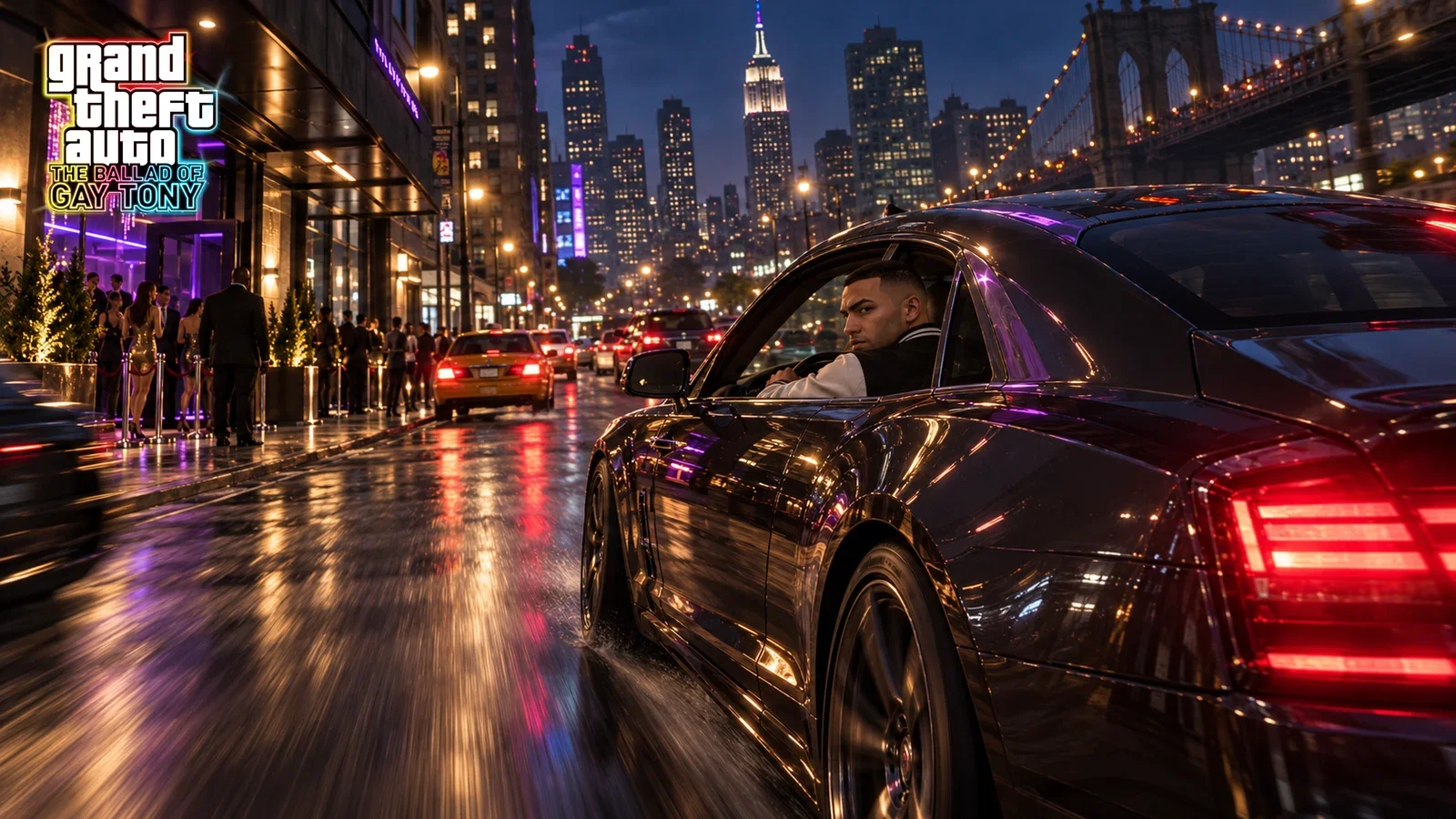
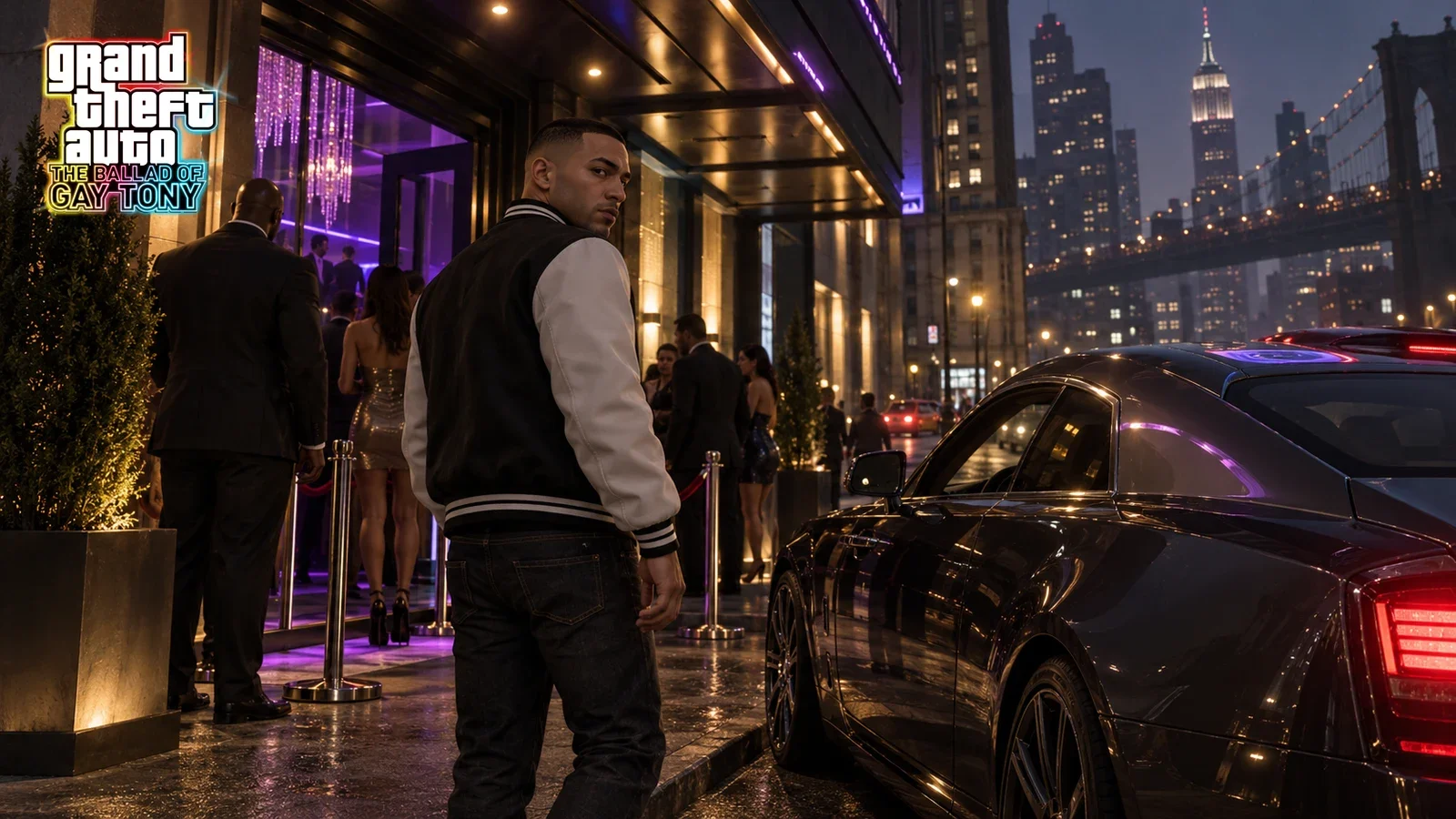
The Ballad of Gay Tony follows Luis Lopez through the nightlife and high-risk business of Liberty City. Tony Prince's clubs provide an entry into wealth and spectacle, but Luis spends much of his time managing the consequences of debts, dangerous associates and conflicting loyalties.
Released in 2009, it is GTA IV's second major story episode. Its brighter presentation and elaborate action create a deliberate contrast with Johnny Klebitz's motorcycle-club story, while both remain connected to Niko Bellic's wider city.
Rockstar North and the production credits
Rockstar North developed the episode and Rockstar Games published it. The official Episodes manual credits Dan Houser and Rupert Humphries for cutscenes and game dialogue. The episode belongs to the GTA IV production lineage associated with producer Leslie Benzies and art director Aaron Garbut.
Mario D'Leon performs Luis Lopez. David Kenner performs Tony Prince. These character performances work alongside mission design, writing, animation and audio production; they should not be substituted for the developer credit.
The episode's identity depends on coordinating several departments. Club interiors, crowds, music, lighting and character behavior all contribute to nightlife scenes, while aircraft and larger action sequences create different demands outside those spaces. Reusing Liberty City does not make those new situations automatic.
Luis Lopez and Tony Prince
Luis works closely with Tony, a nightclub owner whose public glamour is accompanied by serious financial and personal difficulties. Luis also has family and friends whose expectations do not always match the demands of his job.
Tony's clubs include Maisonette 9 and Hercules. The character reference documents Luis, Tony and their links to the other GTA IV stories. The game's title names Tony, but Luis is the playable protagonist; that distinction is essential for readers encountering the episode for the first time.
Yusuf Amir, Ray Bulgarin, Armando Torres and Henrique Bardas are among the other important figures in Luis's world. Their relationships bring different kinds of opportunity and danger. This introduction leaves the later betrayals and final outcomes for the campaign itself.
Nightclubs as more than scenery
The clubs provide recurring places with their own routines and activities. They establish what Luis is trying to keep functioning while outside pressures accumulate. That creates a different relationship to property from buying a business in Vice City or building an empire in Vice City Stories.
The player is not simply collecting a passive income icon and forgetting it. The setting is tied to characters, work and the episode's identity. Understanding Tony's dependence on Luis makes the repeated returns to the clubs part of the story rather than arbitrary travel.
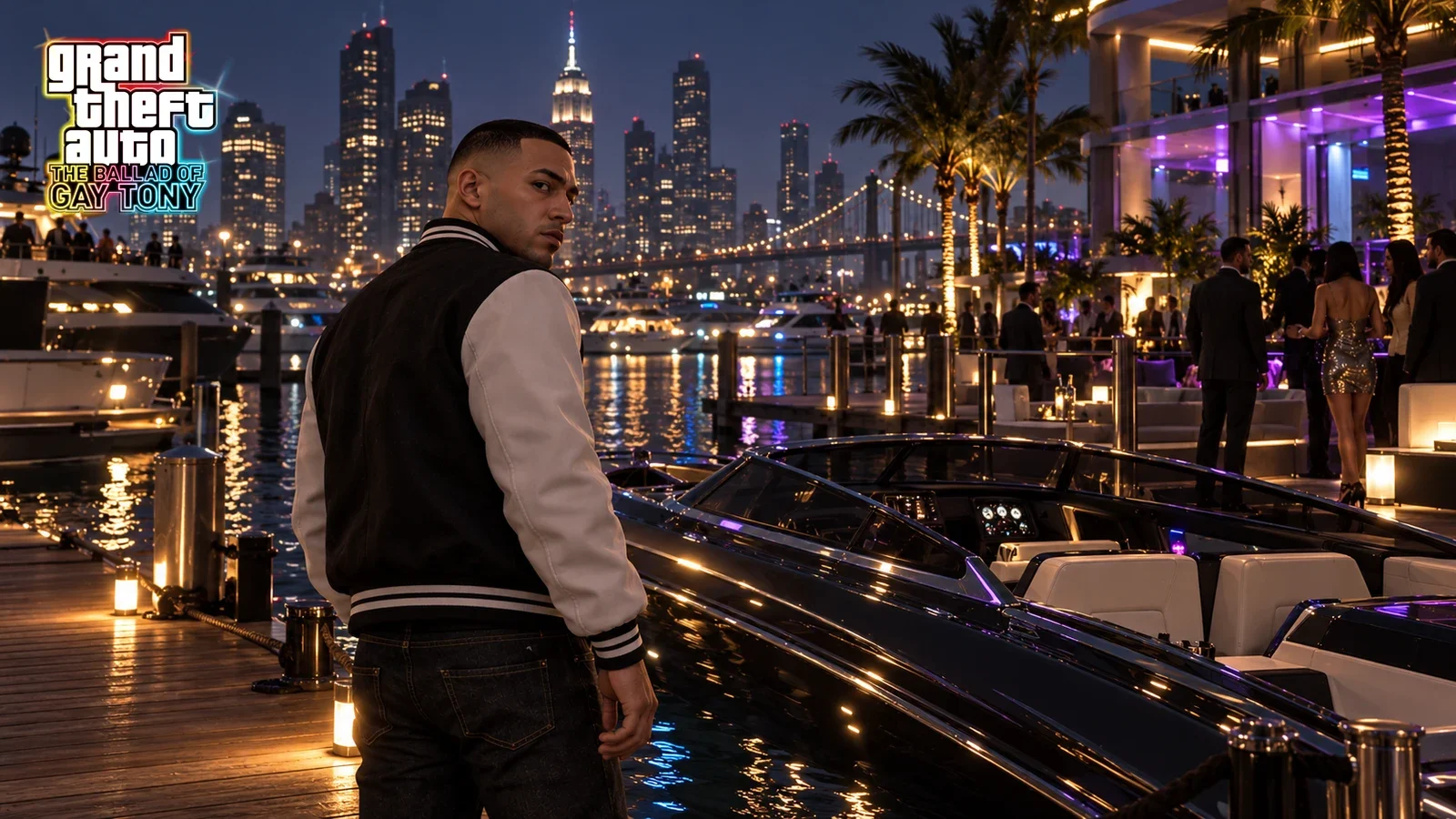
For visual analysis, separate a nightclub's environment from its active systems. Walls, furniture and lighting are one layer; people, animation, music and scripted events are others. A screenshot captures only one moment of that combined presentation.
Parachutes, aircraft and larger action
The episode adds equipment and vehicles that support a more spectacular style of mission. Parachuting is a prominent example, alongside vehicles such as the Buzzard and APC. Their presence changes the kinds of routes and encounters the campaign can create.
These additions belong to the episode. A cheat that spawns a Buzzard for Luis should not be advertised as a working GTA IV base-game number for Niko. Likewise, a shared city does not imply that every weapon appears with the same properties in every campaign.
For a first playthrough, learn each new tool in a setting that gives room to understand its controls. A difficult mission can combine flying, landing, aiming and timing. Identifying which part causes failure is more useful than treating the entire sequence as one undifferentiated difficulty spike.
Mission replay and optional challenges
The episode's replay and scoring structure gives completed missions another purpose. Returning to an objective can be about performing it more efficiently rather than discovering what happens next. That separates story completion from mastery of a particular challenge.
When pursuing mission requirements, use a clean attempt and check the conditions before starting. Sandbox experimentation with cheats is a different activity. A vehicle or weapon spawned for fun can undermine the assumptions behind a scored attempt even when it makes the immediate combat easier.
Optional activities provide a change of pace from the main plot. They also reinforce Luis's position between the clubs, his friends and the city's larger criminal dealings. Treat them as part of the episode's particular identity rather than assuming they match the side activities in Niko's campaign.
How the stories overlap
Luis appears in events that also involve Niko and Johnny. The episode explains his side of those encounters, giving context to people who previously seemed peripheral. This is why the three campaigns work well in release order: each adds information to events already encountered.
The Complete Edition listing includes all three stories. Episodes from Liberty City contains the two additional campaigns, not an extra fourth story. The original release was on Xbox 360, followed by PS3 and PC availability through later releases.
Cheat codes and the right edition
The Ballad of Gay Tony uses in-game phone numbers. Its additional codes cover its own vehicles and effects, while some inherited GTA IV numbers remain relevant. The same number can also deliver an episode-specific weapon selection, so copying only the digits without the effect's context is incomplete guidance.
Use the TBoGT cheat guide for those distinctions. Read the package comparison before choosing between Episodes and Complete Edition, and The Lost and Damned for the other major perspective on the city.
Sources & verification
Sources last verified on . This article covers published information, not hands-on testing.
Editorial & update notes
AI-assisted research and writing based on the linked references. This is not a hands-on review. Images are labelled AI-generated illustrations, not gameplay screenshots.